In January, it was too cold to think of gardens but now I am fired up and ready to go. I sent off my first order to T&T seeds. This was the flower order which I'll start in my basement under lights. (T&T Seeds at garden@ttseeds.com)
I am scaling back this year. I have to. The flower beds are so chock full of large perennials that there is little room for annuals. We have had such a good snow cover that I am confident my perennials are ready to burst as soon as it leaves. (Unless it floods. With so much snow, that is always a possibility).
But I did order some of the old favourites: pink lavatera, canary vine - the best annual climber, godetia, mixed colour impatiens for the shade garden, sweet peas for cutting and lemon gem marigolds to finish the season. I had such good luck growing geraniums from seed that I ordered several packs for the patio posts T&T does not carry the variety of cosmos that I like (sea shell) so I will look for it around town.
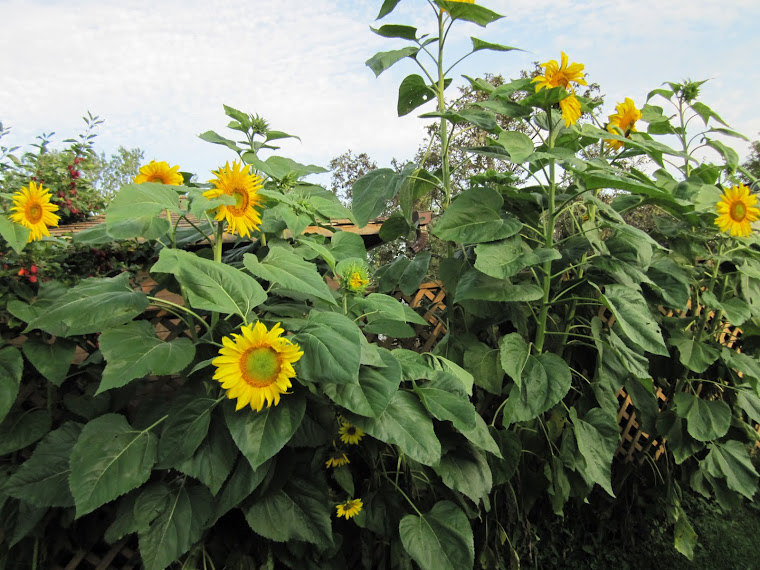
I will be going to some bird festivals in April. This means I have to give up some of the more "picky" plants such as schizanthus, pansies and wave petunias. I did order a few seeds that I will plant straight into the garden, namely bachelor buttons and nasturtiums. These last flow over the bricks that edge the patio. I plan to plant lots of sunflowers along the fence in the back lane as a treat for the birds.
Meanwhile the house is full of the scent of hyacinths. The stems are a little stretched and have to be propped on twigs. Hyacinth stems are hollow and boneless. They will practically lie down across the pot unless they are propped.
The King Alfred Daffodils came along nicely. They bloom for a few weeks, easily the longest blooming indoor bulb. They too stretched in our low northern light conditions but they do not seem to mind. Three pots of three plants each massed together on a side table make a grand winter show.
Friday, 6 February 2009

Sunday, 4 January 2009
Seeds again
Another free catalogue arrives. This one is from Lindenberg Seeds, 803 Princess AV, Brandon, Manitoba R7A 0P5. This catalogue is notable for its large selection of vegetables and flowers. Everything northern is here including the fine pie pumpkin "Sugar", the fast growing Sugar Baby Watermelon and other quick growers that we must have in Northwestern Ontario. On page 86, they give their picks for the best and hardiest varieties for the prairies and, as we all know, if it can grow in Manitoba, it can grow here. The list includes such stalwarts as Detroit Dark Red Beets, Nantes Carrots, and Homesteader Peas. They offer the entire list of 20 varieties on sale for $28.95 regular $32.32, a super deal. I'm buying the package.
Meanwhile the amaryllis are just starting. Christmas tree out to the recyclers and Amaryllis in flower to brighten the winter. I had no luck with my poinsettia this Christmas. It seemed peaky from the time I brought it home from the A&P. The leaves drooped and dropped off. I put it in the sun but it just curled up the more. It is sitting in the snow. If I could get out to the compost, I'd toss it in. One more snow fall and I may lose sight of the compost entirely.
Tuesday, 9 December 2008
Christmas Gifts
Canadian Gardening has an interesting gift list in the current issue. My fav is the following: "My dream gift for Christmas would be a young, strapping male with meaty thighs and a willingness to fulfil my every desire—but mostly to dig, dig, dig.""
Otherwise, consider the following.
1) A garden bandit or weed looper. Just a pole with a loop of metal on the end but oh, what a back saver and efficient weeder.
2) A kneeling stool which can also be turned over to use as a seat. This item is a knee saver and you will find plenty of other uses for it.
3) A pair of Felcro pruners, the best made.
4)A lovely indoor plant or selection of indoor herbs
5) A beautiful bird feeder.
Tip. If you are prone to achy lower back muscles , try this wonderful tip. When you feel the ache coming on, just stand and give yourself a good shake. Shake you fanny and your entire body. Magic.
Friday, 21 November 2008
Tand T Comes Through
Just when the garden is sinking into winter and looking a bit bleak, along comes the first seed catalogue. TandT, a reliable Manitoba grower, first off the mark.
I get several catalogues and I have ordered from many but in the last few years I found all the seeds I need in Stokes and T&T. Stokes is so detailed and gives such good growing information that it is a must for anyone starting seeds inside. T&T provides the Manitoba favourites and if it grows in Winnipeg, it can grow here.
Most seed catalogues start with new introductions. For instance this year T&T offers a frilly petunia, a white egg plant, a striped morning glory and so on. I pay little attention to this section. These plants are for those gardeners who are interested in novelty. Many of these newcomers are never seen in subsequent editions of the catalogue and one wonders just how successful they were for the average home grower.
I seldom order plants from catalogues. I prefer to use the local nurseries and see the plant before I buy.
So what do I look for? Every garden is in flux; every garden changes from year to year. Each year I see new ideas, seeds to try for new conditions. Next year I want more sweet peas, more sunflowers and shorter lilies for border. I'd like to try ferns in the increasing shade of the side garden. I want to switch to a different variety of squash. In the past I grew Swiss chard and I'd like to grow it again. I have increased the size of the front garden bed and have no idea what to put in it yet.
And above all, I love looking at the pictures and dreaming of another season.
Tip. The loop weeder is the greatest garden tool for saving your back. It is just a loop of metal at the end of a long pole. No more bending, kneeling and hand digging weeds. Just swipe into the soil, chomp the weed and leave it where it lies. It is much more efficient and easy than a hoe. A great gift for elderly gardners.
Wednesday, 19 November 2008
Cue the snow, cue the storm, cue the howling winds
Now that our gardens are slipping under the snow, it is a good time to take stock of the past year.
I congratulate myself on reaching November without a garden injury this year -no bursitis, no bad back, no pulled muscles. In the past, I have not been so lucky.
This year I was determined to limit my garden tasks and only work at each for no more than twenty minutes. Easy to say but when you work in a garden, time changes its character. It falls away and loses all meaning. You are always in the present so time does not move along at a normal pace. And there is always is the temptation to do a little bit more.
But this year I bought a garden clock, an item I believe is a necessity to preserve the health of gardeners. I limited myself to twenty minutes per task and the clock, way up on the wall of the garden shed, monitored the minutes. I suppose a kitchen timer would work just as well.
Dr. Charles Bryan, a local chiropractor, who has seen a fair number of gardeners' aching backs and repetitive strain injurues, says the first rule of gardening is to put a limit on each task. Gardening is an athletic endevour he says and just as most of us cannot run for hours so we cannot garden for hours.
Garden clocks or exterior clocks showed up in garden centres two years ago. At first they were expensive but the price dropped this year. My clock is made of scrolly iron work and takes two A batteries. I think it is an attractive garden feature.
Sunday, 16 November 2008
The snowless area
Snow to the east and snow to the west but nothing to speak of in Thunder Bay. Deep grey clouds sail over but no drama. A friend, a long time resident, says she can smell approching snow but she does not smell it yet. She says there is a hush, as if the trees were holding their breath, but she has not tuned into this either.
I make a trip out to Vanderweese to look at the wonderful Christmas displays. I am also hoping to find dwarf ameryllis but no luck. I note their bulbs run from 13$ up, at least five dollars more expensive for similar bulbs in the supermarket.
At home I put out water for the birds and every day I thaw ice in the big plastic plant saucer with a kettle of hot water. The birds are on the hunt for water these days as the usual supplu slowly freezes over. Several years ago I bought a bird bath heater but it did not work well in deep cold. I will use the kettle method until the big freeze sets in.
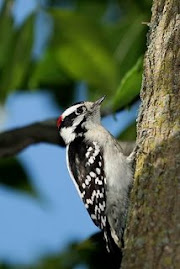
A downy woodpecker, which I have seen in this urban neighbourhood before, shows up for some suet cake. She is a female, as shown by the lack of the red spot on the back of the head. The downy is the most common woodpecker found in the city. This small upright black and white bird sometimes gives a high squeaking call.
A gang of starlings are eating the crab apples. Darn! I was hoping to attract cedar waxwings but no, the short tailed speckled guys with their long bills are stripping the fruit now that the frost has softened it.
On the patio, the juncos look like sparrows dressed in tuxedos. They are black with a white tummy and when they fly you can see their natty white outer tail feathers. Sometimes they give a funny little hop. They also make clicking noises, probably to keep in touch with each other.
Sunday, 9 November 2008
snow, lovely snow
A light snow is sifting down. The juncos leave birdy tracks on the patio where they are feasting on black oil sunflower seeds. The resident chickadee pecks at the bird cake in its holder. The grey squirrel arrives to steal what it can.
The garden is settling into winter. The gardener is still washing pots inside. She had a pleasant gift this week, ten big plastic bags full of leaves. She drags them to the compost and empties several over the remaining pile and turns out one bag over the daphne bush, a tender plant still holding on to its variegated leaves.
But in the back garden all leaves are fallen. Only a few berries remain on the high bush cranberry and nothing on the mountain ash. The lamium, alive yesterday, is frozen today. In front, the mullein still blooms in the sharp wind and blowing snow. It must be the world's toughest plant. It has been blooming since August.
I should have brought the hose in earlier, thinks the gardener, struggling with a frozen 100 feet of ice.
Now is the time to plant the indoor bulbs. The amarylis have arrived at Vanderweese and other stores. Nothing is more cheery in the winter than this marvelous indoor flower. Every child in Thunder Bay should have an amarylis to plant and watch it stretch into bloom.
Monday, 3 November 2008
High Park Toronto
Some years ago, the decision was made to change Toronto's High Park from a typical urban manicured space into an ecological wilderness. What a delight it is. From downtown you take the Queen Street East street car to Park Drive. You can walk the trails around Grenedier Pond and up to the restaurant where you can get a nice hot chocolate. Native trees and plants attract plenty of birds: ducks, trumpeter swams, cormorants, Canada geese on the ponds and gold finches, sparrows and late warblers in the trees. There is also a small zoo hidden in there somewhere. Thunder Bay has few oak trees but here there are many. In October they are a deep copper colour, beautiful alongside the bright red maples.
Even in late October Toronto gardens are interesting. A few roses bloom on. Many small downtown front yards have eschewed lawn for rock/plant/shrub compositions. I saw plenty of lamium and lots of spreading allysum.
Friday, 24 October 2008
Oh Natural!
From the corner of Balmoral and Central Avenue, turn west past Robins's and the car wash place. A little farther along, on the right side is the Central Natural Enviromental Garden, a nice place to stop and walk about or sit for a while. A picnic table provides one of the few places to eat a picnic in the inter-city area. There is a small parking area at the back.
A set of wild flower gardens unfurl under the willows, spruces, pines and two lovely small gold tamaracks. Even in the late fall, there is lots of interest as the natural plants hold out their seeds and the birds arrive.
Evening primrose, prairie sunflower, pearly everlasting, golden rod, dame's rocket, brown eyed susan, anise hysop, mullein, hawk weed (also called devil's paint brush), pinks, flax and other wild flowers are identified by well-made signs. This is a good place to check out the looks of the wild plants that you might want to use in your own garden.
I was interested to see a pile of wood chips at the back of the garden and note the use of wood chips between the groups of plants. Wood chips make a great weed repelling mulch, much more attractive and enviromentally friendly than plastic or weed barrier cloth. Also I some of the paths are just made of mown grass, a very nice way to create a path in a heavily planted garden.
Thursday, 23 October 2008
Garden, stil going on.
I cannot believe things are still blooming in the gardens around town. Today I was amazed to see a Stella d'oro day lily arrive with a few fat buds ready for the next few days. Stella is not my favourite day lily. It is not very florifierous and it is small. But if I ever fulfil my dream to make a garden room entirely of day lilies and Asiatic lilies, Stella would be there if only because it is tough.
The marigolds are amazing around town. My tiny yellow ones, (a variety called lemon gem grown from seeds fromT&T) may bloom all winter. They pay no intention to the frost at night. I gave away a lot of lemon gem plants which are blooming merrily where ever they were planted. They make balls of small yellow flowers and, in fact, do not look like marigolds at all.
Also hanging around are the bachelor buttons and a few Marie Bugnet roses. Don't these plants know it is almost Hallowe'en?
Is it my imagination or are the leaves also slow to fall this year. I am ready for them. I rake them into a tarp, gather up the corners and toss them on the compost. I also like to get a few clear plastic bags full of leaves to put on the compost as a sort of insulation. They rot a bit inside the plastic. In spring I use them to layer up with greener compost material.
I will spread compost over the garden now. I know that the garden magazines say to spread it in the spring, but these magazines are written in wussy Southern Ontario, a place where you can put a garden fork into a compost pile in April. We are lucky if we can clean out a compost pile in June without hitting ice. So I spread the good stuff at the bottom of the pile now and replace all the half rotten stuff for another year.
Wednesday, 15 October 2008
Bringing plants inside
What can thrive inside and what can't. Many herbs can make the transition to a sunny window. Some herbs such as the perennial, rosemary, do well indoors. The parsleys do fine but my basil falls apart. Maybe this Mediterranean herb does not get enough light as the days shorten.
Last year I brought pansy plants inside, sheared them back and hoped they would bloom again. They did do so but with such small short-lived blooms the experiment was hardly worth the effort. I remembering giving one pansy plant as a gift to be told later that blooms fell off and in a few days the plant died. Not a great gift.
This year I have brought in a few geraniums and they are starting to set buds already.
Ever since I had an infestation of aphids in the plants of my back porch, I have been very cautious about bringing in the outdoors. I was able to defeat the aphids with Safer's Trounce but recently I heard of a woman who brought in slugs (or the eggs) and they crawled around her basement. Yikes! Before I bring a plant inside for the winter, I pull it, shake off the excess soil and give it a quick bath in warm soapy water. (Soapy water kills aphids. ) I rinse it off under the hose and replant inside using a sterile soil mix such as Pro-mix. The plants survive this rough treatment surprisingly well.
Monday, 13 October 2008
Last Tea in the Garden?
It takes five minutes for the garden to arrive. When you are out there with your cup of tea or your lunch, your mind, for the first five minutes, continues to huffle along with its indoor thoughts: tasks to do, the upcoming elections, the book you are reading, the state of your life generally. But at the same time you are looking around and the garden world is permeating your brain and then it "arrives" and you feel yourself part of your outdoor place. You notice everything within view and the greenery becomes part of you.
I love variegated leaves on plants and in the fall the entire garden is variegated. There are many gold leaves among the green. The hostas glow golden as do have the leaves of many bushes. A few red leaves show on the high bush cranberry and the peonies. Tiny dots of blue mark the last bachelor buttons. A lone pink cosmos shines against the fence. The spikes of monks hood and delphiniums are brown. But the main colour now is green, dark green grass mixed with autumn leaves.
Sunday, 12 October 2008
A Bird in the Hand
I once saw a chickadee eating from a baseball glove. The glove was on the hand of a friend. She had set up a sort of stick man and fed the birds from the glove attached to an arm stick. Later she held the glove and the chickadees gradually came.
Another friend tells me how he enticed the whiskey jacks. He put dog food on a small table outside. As many dog owners in the country are aware, whiskey jacks love pet food. My friend sat on a chair at some distance from the table. Gadually he moved the chair closer. Finally he was sitting at the table. Everything good comes in small steps. An arm on the table. An arm with an open hand with food in it. They hop right up. Now when he walks around his country property, he has to load his pockets with dog food.
The sad news is that few of us in town are lucky enough to have whiskey jacks come to our feeders. The good news is that the juncos, those weed seeding eating fiends, have arrived.
Thursday, 9 October 2008
Trees and Landscaping
The south end of Syndicate Avenue looks lovely with its new pavement patterns and healthy small trees. Other places around town, particularly the down town areas and the west end of Bay Street are enhanced by small trees which one day, and not far off, will produce inviting streetscapes. Of course, once you move away from the business streets and into the residential areas, you find shady walks, lovely gardens, interesting landscaping.
But alas it is not enough. Our city planners and local businesses have busied themselves this summer dumping tar everywhere. Not on drive or walkways where asphalt is needed but any other place possible. On earth spaces where bushes, plantings and small trees could go, we in Thunder Bay get more black tar. It stretches along side sidewalks, on road medians and corners, around businesses and apartment buildings with, often, a dumpster or a pile of tires to complete the landscaping creating an instant slum look on our major streets.
Anything, anything, any monstrosity it better than planting something or pulling a weed. It seems odd to me that business staff can be asked to sweep a parking lot or pick up trash but cannot be required to remove a weed or water a planter.
I know that many of our local business owners would never consider paving their front lawns at home and adding a rusty fence or a dumpster or a garbage can or several large pot holes or a dilapidated sign. They would no more consider it than they would stand on their heads naked on their own roof tops. But the same owners turn their business into a slum and ruin our city. The idea that Thunder Bay will attract tourists is laughable after you take one drive along Memorial Avenue.
Monday, 6 October 2008
Half a Frost
Last Thursday night, after a family dinner, I said good-bye to the garden. I walked around in the dark zero degree air and said good-bye to the big hosas, the cosmos, the lavatera, and the nicotania. The next morning I saw a half frosted garden.
It was interesting to note what survived and what lived. The plants close to the fence and the shed fared better than those exposed in the centre bed. The front yard was not touched at all nor was the side garden between two houses. But an area in the back a slight bit lower that the main section was badly hit. Usually the hostas are most susceptible to frost but this year it was the cosmos.
Today I pulled out black cosmos. They were the biggest and toughest cosmos I have ever grown. Many plants were over 6 feet tall with stalks like small trees. I also continued weeding and emptying pots. I empty pots the easy way by pulling out the plants and then tipping the pot into the garden and spreading the soil among the perennials. This is easier than shovelling into a wheel barrow etc.
Subscribe to:
Posts (Atom)